Alpini bridge in Bassano del Grappa (VI) - analysis




Laser scanner technology was used to fully analyse the Alpini bridge, 3D scans being taken with an HDS 7000 (Leica Geosystems) scanner which can identify a space cloud of 106 dot/s to a precision of +/- 1mm at a range of 1m-50m. Single scans were geo-referenced and correlated to describe each object in detail, in its full complexity, creating a unique dot cloud. Autocad was then used for vectorization which could split or skim off the whole dot cloud to the section to be outlined.
Analysis has highlighted that deformation, and especially that which has occurred over recent years, has become significant: the follow up diagnosis looked into the causes while also identifying levels of structural degradation.
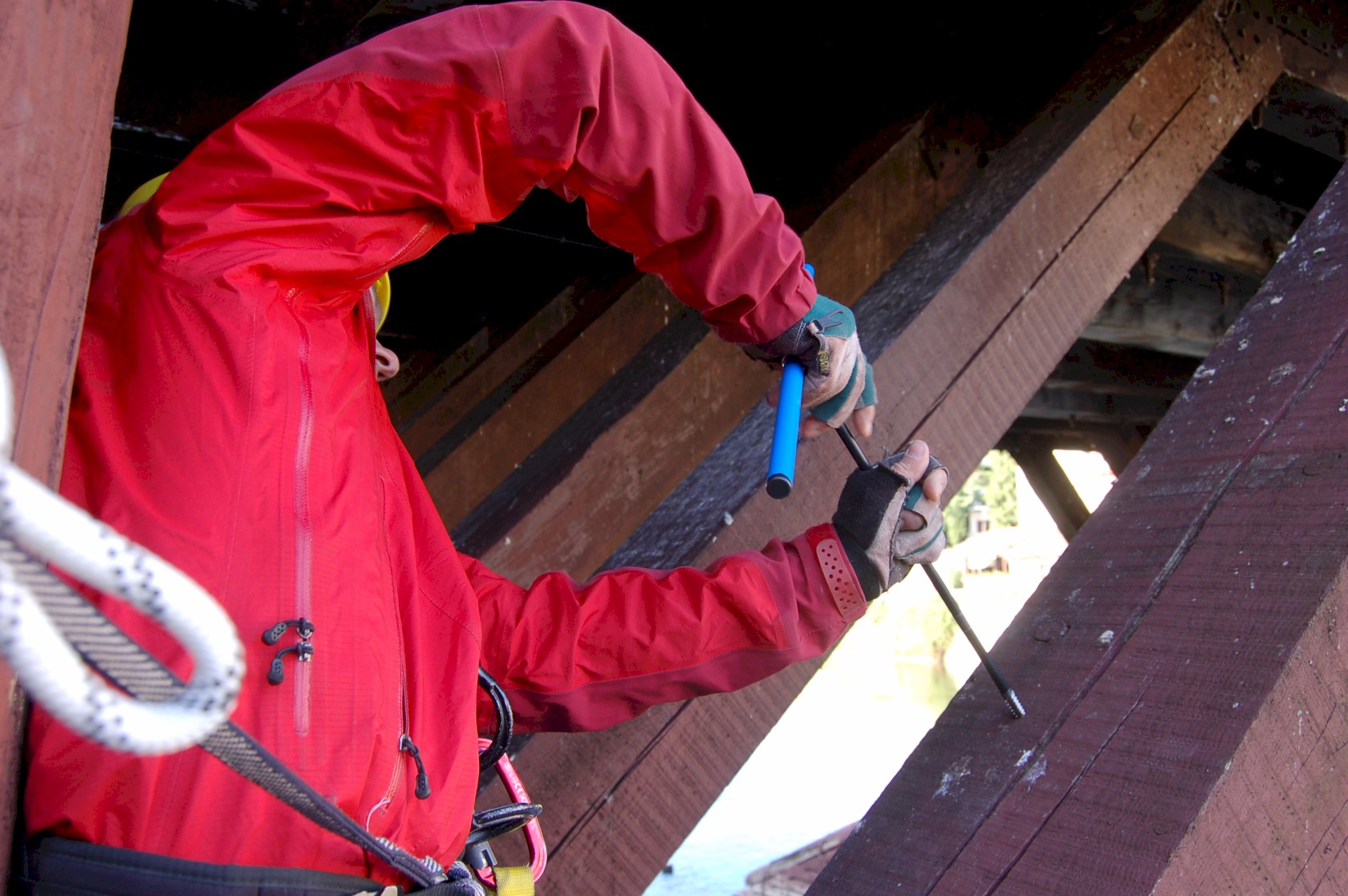
Access and positioning techniques through ropes gave the closest possible inspection of the structure, in particular, its critical points. Where anomalies were found, including cracks, fungus, insect nests and malformation visual analysis was integrated with manual tools (hammer and pick). In so doing, it was possible to highlight the area for structural analysis and to then identify degradation in wooden elements.
Furthermore, resistograph tests found the condition of wood was dramatically decayed. Samples were also taken to be analysed in the laboratory for typology of wood and reinforcing material used.
Macroscopic wood sampling was carried out using the dichotomic index present in literature to identify the type of wood used for the structure (larix decidua) and that used for the struts constantly submerged in water (presumably oak) conforming to types of wood historically used in this region.
The other fundamental structural elements of the bridge are the abutments, which, at surface level appear to be partly fully brick masonry, partly brick with some stone blocks. To evaluate the geo-metric characteristics and their composition, thereby determining their stress levels and mechanics, coring with sampling was carried out followed by endoscopic video inspection and single and parallel flat jack testing. Once again, a rope base access methodology was employed.
The evident subsidence on the Alpini bridge required structural monitoring which was carried out using an HDS 7000 Leica Geosystems scanner for the first year. Following removal of the flooring, as a precautionary measure, monitoring continued through topographic shots using a Leica TCRA 1201 station.
Data sheet
- client: Bassano del Grappa (VI) city council
- location: Bassano del Grappa (VI)
- activities: laser scanner survey, material degradation inspections, masonry characterization, topographic structural subsidence monitoring, activities performed through positioning and access by ropes
- period: 2014-2015
The activities are describe in:

Bridges

Vittoria bridge in Bassano del Grappa (VI)
Reinforced concrete condition was verified through access and positioning system by ropes. Structural analysis was carried out through sufficient sampling of m...

Valdone bridge in Valmalenco (SO)
A structural monitoring system was set up with fixed instruments inside and outside the bridge deck. Analysis foresaw both internal and external structural ins...

Rio Bondai medieval bridge in San Lorenzo, Banale (TN)
Bridge masonry work was in an evident state of disrepair and analysis aimed at collecting metric and material information concerning masonry foundation structur...