Polirone Abbey: information management of the BIM model during construction
7 December 2020

The Polirone Abbey of San Benedetto Po is one of the largest Benedictine monastic complexes in Italy, founded in 1007 by the will of Tedaldo di Canossa. Over the following centuries, the monastery experienced an exceptional period of expansion, followed by an initial phase of decline and a later resurgence during the Gonzaga period. In any case, the monastery left an enduring mark on the development of the surrounding territory, extending well beyond the immediate area of the Mantuan Oltrepò.
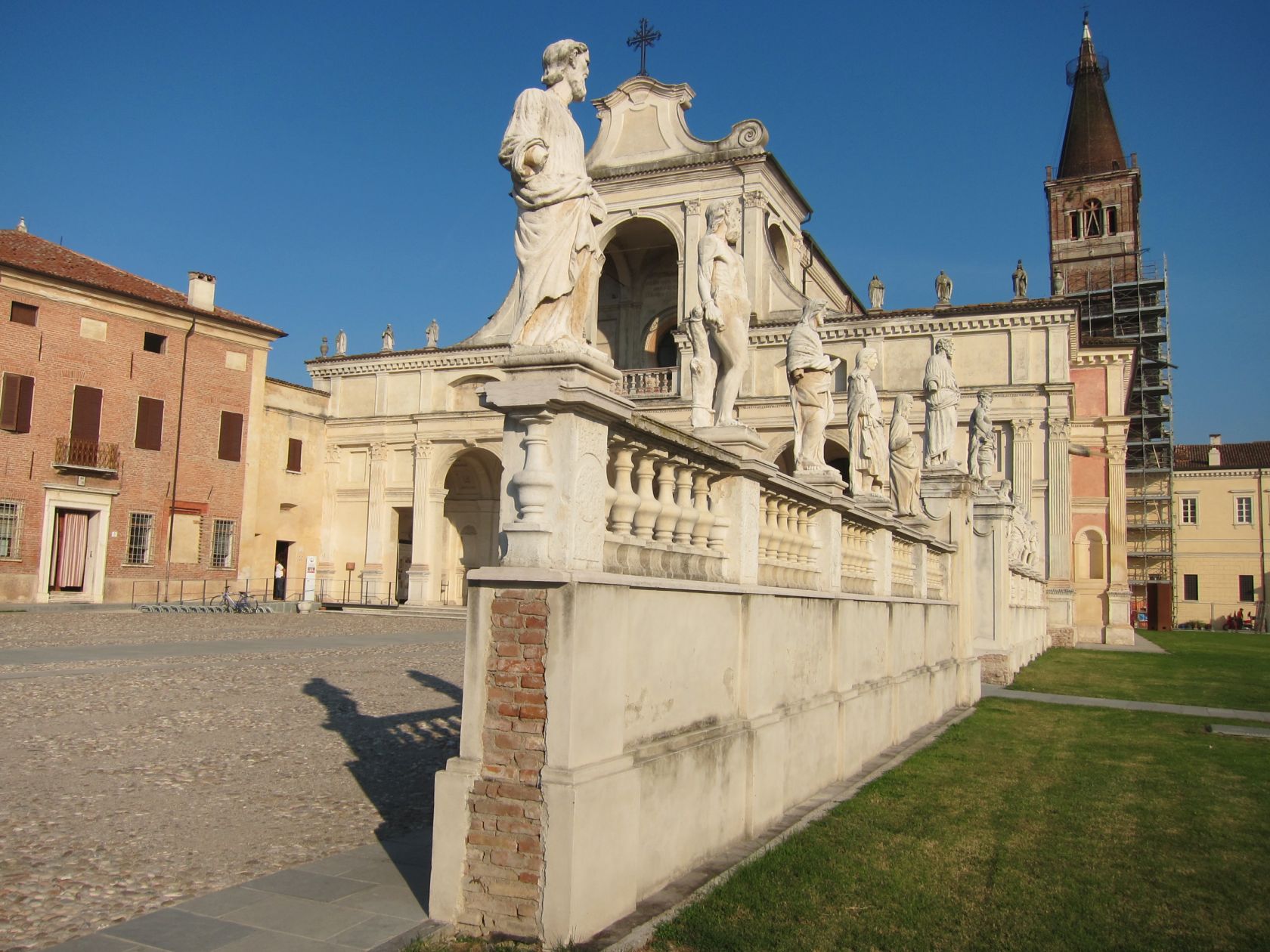
Following the 2012 earthquake, complex repair and seismic improvement works became necessary. In particular, the interventions on the wings of the Cloister of the Secolari were designed using BIM (Building Information Modeling), allowing the design process to be managed in an innovative way. The Works Management (Studio Berlucchi of Brescia) strongly required that the same BIM methodology be applied during the subsequent execution phase by the contracting company. For this reason, the contractor Marmiroli S.r.l. appointed Foppoli Moretta and Associati to support the implementation of the BIM model in line with the progress of the works.
BIM represents a highly innovative operational procedure for interventions on cultural heritage, an area in which FMeA has extensive experience gained through numerous assignments carried out over the past years in many regions of Italy (Trentino A.A., Lombardy, Friuli V.G., Piedmont) and at various project levels.
By introducing into the BIM model an accurate system of parameters and measurements reflecting the works as they are carried out, it will be possible to interact directly with the Works Management through the model and, at the end of the construction site, to precisely reconstruct the entire implementation process. The client will also benefit from a fully updated model containing the complete conservation plan of the complex.